
-
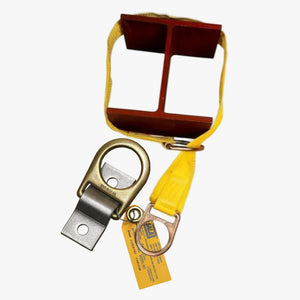
3M Anchorage Connectors
13 products -
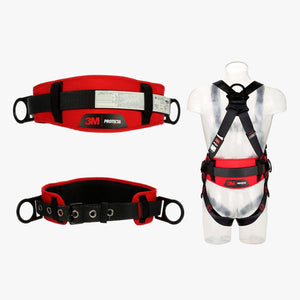
3M Body Belts
6 products -
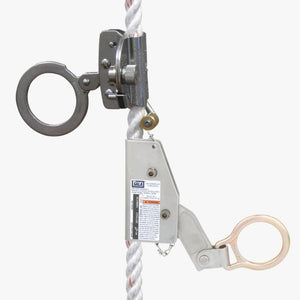
3M Cable & Rope Grabs
1 product -
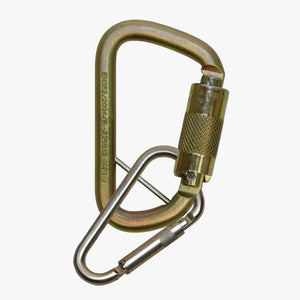
3M Carabiners
1 product -
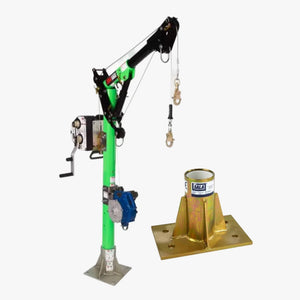
3M Confined Space
1 product -
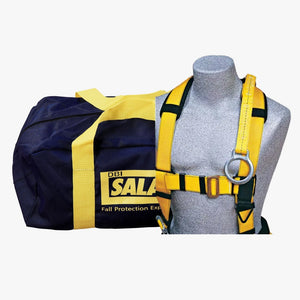
3M Fall Protection Accessories
5 products -
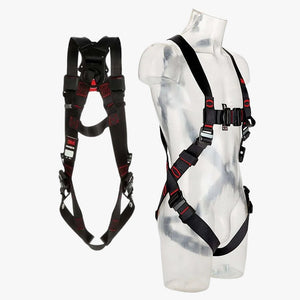
3M Full Body Harnesses
27 products -
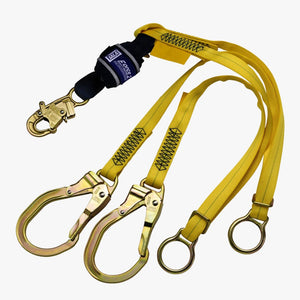
3M Lanyards
13 products -
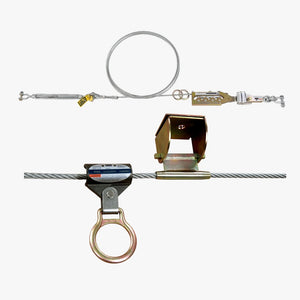
3M Lifelines
27 products -
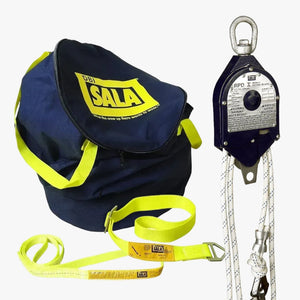
3M Rescue & Descent Devices
1 product -
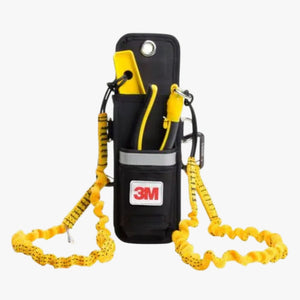
3M Tool Fall Protection
5 products
 4% off
3M
Sale price $82.07 Regular price $85.29Unit priceAvailable for Backorder- 4% off
3M
Sale price $194.16 Regular price $201.76Unit priceAvailable for Backorder -
 14% off
3M
Sale price $1,023.03 Regular price $1,193.54Unit priceAvailable for Backorder- 4% off
3M
Sale price $194.16 Regular price $201.76Unit priceAvailable for Backorder -
- 4% off
3M
3M 1500123 DBI-SALA Parts Pouch, Canvas, Extra Deep, Small, Black (7100157156)
Sale price $92.61 Regular price $96.23Unit priceAvailable for Backorder -
- 4% off
3M
Sale price $285.90 Regular price $297.09Unit priceAvailable for Backorder -
 4% off
3M
Sale price $84.13 Regular price $87.42Unit priceAvailable for Backorder- 4% off
3M
Sale price $995.01 Regular price $1,033.97Unit priceAvailable for Backorder -
 4% off
3M
Sale price $67.21 Regular price $69.84Unit priceAvailable for Backorder- 4% off
3M
Sale price $131.31 Regular price $136.46Unit priceAvailable for Backorder -
 4% off
3M
Sale price $64.40 Regular price $66.93Unit priceAvailable for Backorder 2% off
3M
3M 37344 TR-626X Versaflo Belt Extender for TR-626 High Durability Belt, Gray, 20 in (7100035832)
Sale price $59.83 Regular price $60.97Unit priceAvailable for Backorder
3M
3M AJ408AG10 PROTECTA Cable O-ring Extension Anchor, 10 ft (7012822271)
Regular price $113.50Unit priceAvailable for Backorder3M
Regular price $168.14Unit priceAvailable for Backorder-

3M
3M 1091014 PROTECTA Tongue Buckle Positioning Belt with Hip Pad, Red, Medium Large (7012815161)
Regular price $107.21Unit priceAvailable for Backorder
3M
Regular price $107.21Unit priceAvailable for Backorder3M
Regular price $107.21Unit priceAvailable for Backorder-

3M
Regular price $118.24Unit priceAvailable for Backorder3M
3M 1161204 PROTECTA P200 Comfort Construction Positioning Safety Harness, Black, Small (7100232011)
Regular price $160.13Unit priceAvailable for Backorder-
- 9% off
3M
Sale price $9,127.49 Regular price $9,984.00Unit priceAvailable for Backorder -
3M
3M 1161207 PROTECTA Comfort Construction Style Positioning Harness, Black, X-Large (7100232014)
Regular price $160.13Unit priceAvailable for Backorder-
3M
3M 2190055 Protecta Concrete Anchor Bolt-On 12Mm Swivel D Anchor Silver Gold (7100207457)
Regular price $137.96Unit priceAvailable for Backorder-
3M
Regular price $446.21Unit priceAvailable for Backorder-
3M
Regular price $437.85Unit priceVery low stock (3 units)-
3M
Regular price $678.61Unit priceAvailable for Backorder-
3M
Regular price $1,021.65Unit priceVery low stock (1 unit)-
3M
Regular price $771.57Unit priceVery low stock (1 unit)-
- 11% off
3M
3M 1500174 Quick Wrap Tape for Tool Tethering and Securing (7100204330)
Sale price $26.11 Regular price $29.27Unit priceVery low stock (1 unit) -


3M Fall Protection
- Full Body Harnesses: Personal protective equipment that distributes fall arrest forces across the body's strongest areas (shoulders, thighs, pelvis), connecting workers to fall protection systems while minimizing injury during fall events.
- Lanyards: Flexible connectors linking harnesses to anchorage points, available in standard, shock-absorbing, and self-retracting configurations that limit fall distance and arrest falls within safe force limits.
- Anchorage Connectors: Hardware and systems that create secure attachment points for fall protection, including beam anchors, roof anchors, concrete anchors, and temporary anchor systems for various structural conditions.
- Vertical Lifelines: Cable or rope systems allowing vertical movement while maintaining continuous fall protection, used on ladders, towers, and vertical structures where workers ascend and descend.
- Horizontal Lifeline Systems: Cable, rail, or rigid track systems spanning horizontal distances that allow workers to move laterally while remaining connected to fall protection throughout travel.
- Fall Protection for Tools: Tethering systems, tool lanyards, and attachment methods that prevent dropped tools from becoming falling object hazards for workers below.
- Fall Protection Kits: Pre-assembled combinations of harnesses, lanyards, anchors, and accessories configured for specific applications, providing complete fall protection solutions.
Frequently Asked Questions
What's the difference between fall arrest and fall restraint?
What's the difference between fall arrest and fall restraint?
Fall arrest systems stop falls after they begin, arresting the worker's descent before striking a lower level. Fall restraint systems prevent falls from occurring by physically preventing workers from reaching fall hazards. Fall restraint is preferable when feasible since it prevents falls entirely rather than arresting them. However, many work situations cannot be addressed with restraint alone, requiring arrest capability. Understanding the distinction helps in selecting appropriate systems for specific applications.
What is the weight capacity of fall protection equipment?
What is the weight capacity of fall protection equipment?
Standard fall protection equipment is typically rated for workers weighing between 130 and 310 pounds (including clothing and tools). Workers outside this range require equipment specifically rated for their weight. Exceeding weight ratings can result in equipment failure or excessive arrest forces during falls. Some manufacturers offer equipment rated for expanded weight ranges up to 400 or 420 pounds. Always verify equipment ratings accommodate actual user weight including everything worn and carried.
What anchorage strength is required for fall protection?
What anchorage strength is required for fall protection?
OSHA requires anchorages capable of supporting 5,000 pounds per attached worker for fall arrest, or anchorages designed by a qualified person as part of a complete system with a safety factor of at least two. This strength requirement ensures anchorages can withstand the dynamic forces generated during fall arrest without failure. Not all structural elements can serve as anchorages; proper anchorage selection requires understanding both the anchor system's capacity and the structure's ability to support it.
What is suspension trauma and how do I prevent it?
What is suspension trauma and how do I prevent it?
Suspension trauma (orthostatic intolerance) occurs when a worker hangs motionless in a harness after fall arrest. Blood pools in the legs, reducing return to the heart and potentially causing unconsciousness, injury, or death within minutes. Prevention requires prompt rescue (generally within 15 minutes) and avoiding complete motionlessness during suspension. Some harnesses include suspension trauma straps that allow workers to stand in loops, maintaining leg movement and blood flow. Rescue planning and capability are essential for any fall arrest system.