
-
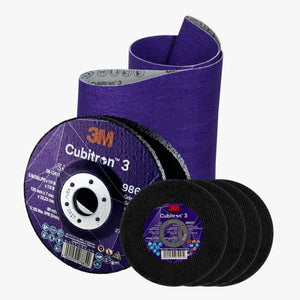
3M Cubitron 3
78 products -
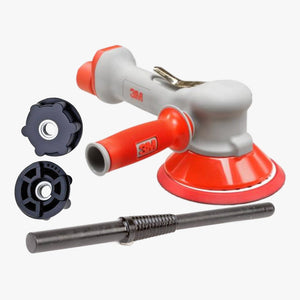
3M Cubitron Accessories
16 products -
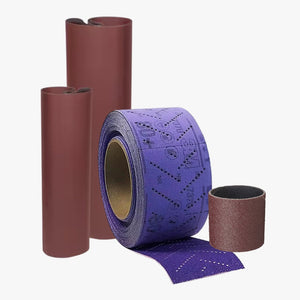
3M Cubitron Cartridge Rolls & Spiral Bands
15 products -
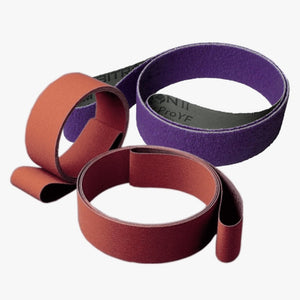
3M Cubitron Cloth Belts
79 products -
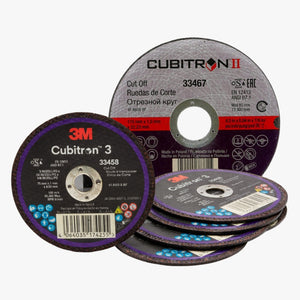
3M Cubitron Cut-Off Wheels
13 products -
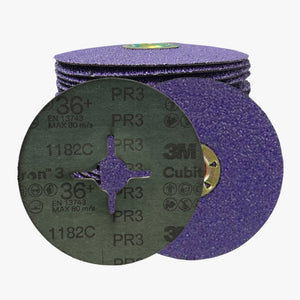
3M Cubitron Fibre Discs
79 products -
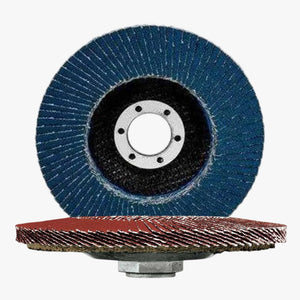
3M Cubitron Flap Discs
91 products -
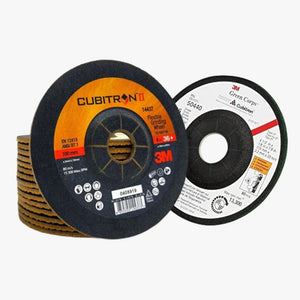
3M Cubitron Grinding Wheels
26 products -
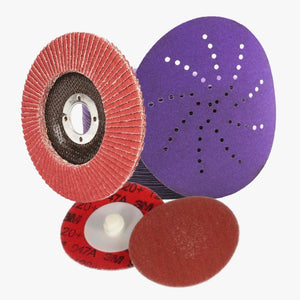
3M Cubitron II
346 products -
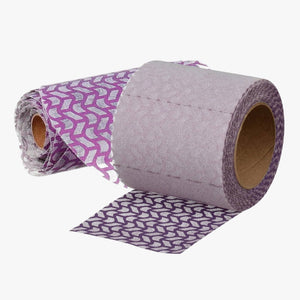
3M Cubitron Net Abrasives
32 products -
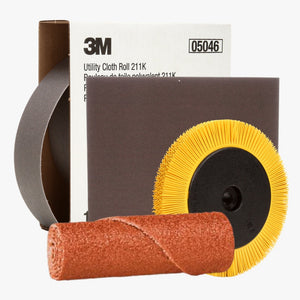
3M Cubitron Original
40 products -
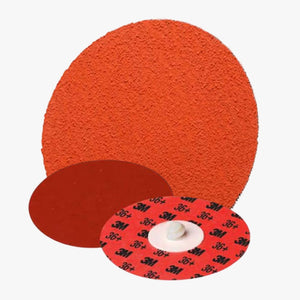
3M Cubitron Roloc Discs
7 products -
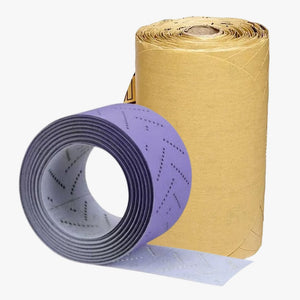
3M Cubitron Sanding Discs
103 products -
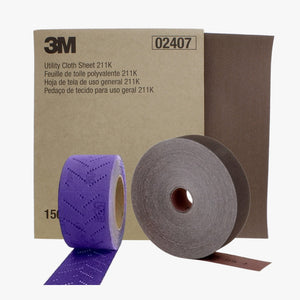
3M Cubitron Sheets & Rolls
11 products -
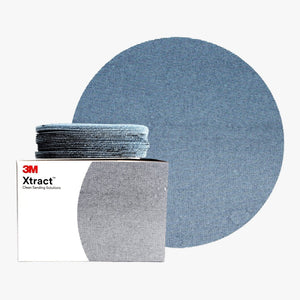
3M Cubitron Xtract
39 products
- 50 pack
3M
3M 90053 Cubitron Cut-Off Wheel, 60+, T27, 4-1/2 in x 1/8 in x 7/8 in, Black (7100304308) (50 Pack)
Regular price $332.99Unit priceAvailable for Backorder -
- 25% off
3M
Sale price $14.55 Regular price $19.40Unit priceAvailable for Backorder -
- 40% off
3M
Sale price $120.00 Regular price $199.99Unit priceIn stock (100 units) -
- 17% off
3M
3M 1169F Cubitron 3 Flap Disc, 60+, T27-Flat, 7 in x 7/8 in (7100416619)
Sale price $69.32 Regular price $83.85Unit priceAvailable for Backorder -
- 17% off
3M
3M 11225 Disc Back-up Pad Ribbed, Extra Hard, Red, 6 in (7100362486)
Sale price $32.50 Regular price $39.32Unit priceAvailable for Backorder -
- 17% off
3M
3M 88656 Disc Back-up Pad Ribbed, Extra Hard, Red, 5 in (7100258733)
Sale price $30.67 Regular price $37.10Unit priceAvailable for Backorder -
- 17% off
3M
3M 88657 Disc Back-up Pad Ribbed, Extra Hard, Red, 7 in (7100258730)
Sale price $31.76 Regular price $38.41Unit priceAvailable for Backorder -
- 17% off
3M
Sale price $75.71 Regular price $91.58Unit priceAvailable for Backorder -
- 17% off
3M
3M 1169F Cubitron 3 Flap Disc, 80+, T29-Conical, 4-1/2 in x 7/8 in (7100380288) (10 Pack)
Sale price $68.44 Regular price $82.79Unit priceAvailable for Backorder -
- 17% off
3M
3M 1169F Cubitron 3 Flap Disc, 60+, T27-Flat, 5 in x 7/8 in (7100380168) (10 Pack)
Sale price $82.63 Regular price $99.96Unit priceAvailable for Backorder -
- 17% off
3M
Sale price $84.21 Regular price $101.87Unit priceAvailable for Backorder -
- 17% off
3M
3M 1169F Cubitron 3 Flap Disc, 80+, T29-Conical, 5 in x 7/8 in (7100380316) (10 Pack)
Sale price $82.63 Regular price $99.96Unit priceAvailable for Backorder -
- 17% off
3M
3M 1169F Cubitron 3 Flap Disc, 60+, T29-Conical, 4-1/2 in x 7/8 in (7100380209) (10 Pack)
Sale price $68.44 Regular price $82.79Unit priceAvailable for Backorder -
- 250 pack
3M
Regular price $176.38Unit priceAvailable for Backorder -
- 800 pack
3M
Regular price $538.50Unit priceAvailable for Backorder -
- 250 pack
3M
Regular price $225.00Unit priceAvailable for Backorder -
- 200 pack
3M
3M 987C Cubitron II Roloc Fibre Disc, TR, 80+, Orange, 3 in, Die R300V (7100050302) (200 Pack)
Regular price $460.50Unit priceAvailable for Backorder -
- 200 pack
3M
Regular price $474.00Unit priceAvailable for Backorder -
- 200 pack
3M
Regular price $204.00Unit priceAvailable for Backorder -
- 10 pack
3M
Regular price $87.50Unit priceAvailable for Backorder -
- 50 pack
3M
Regular price $114.13Unit priceAvailable for Backorder -
- 5 pack

3M
Regular price $282.81Unit priceAvailable for Backorder - 100 pack
3M
Regular price $540.00Unit priceAvailable for Backorder -
- 300 pack
3M
Regular price $186.23Unit priceAvailable for Backorder -
- 2000 pack
3M
Regular price $1,411.00Unit priceAvailable for Backorder -
- 250 pack
3M
Regular price $4,207.50Unit priceAvailable for Backorder -
- 200 pack
3M
Regular price $1,075.50Unit priceAvailable for Backorder -
- 50 pack
3M
Regular price $169.94Unit priceAvailable for Backorder -
- 200 pack
3M
3M 737U 31361 Cubitron II Hookit Clean Sanding Abrasive Disc, 3 in, 80+ (7100147541) (200 Pack)
Regular price $177.60Unit priceAvailable for Backorder -
- 50 pack
3M
Regular price $156.63Unit priceAvailable for Backorder -
- 100 pack
3M
3M 982C Cubitron II Fibre Disc, 36+, TN Quick Change, 7 in, Die TN700BB (7000119162) (100 Pack)
Regular price $621.00Unit priceAvailable for Backorder -
- 200 pack
3M
Regular price $610.50Unit priceAvailable for Backorder -
- 20 pack
3M
Regular price $819.75Unit priceAvailable for Backorder -
- 250 pack
3M
Regular price $3,225.00Unit priceAvailable for Backorder -
- 6 pack
3M
Regular price $583.35Unit priceAvailable for Backorder -
- 200 pack
3M
Regular price $255.65Unit priceAvailable for Backorder -


Revolutionizing Metalworking with 3M Cubitron


3M Cubitron Abrasives
- Abrasive Belts: Continuous-loop sanding media powered by Precision-Shaped Grain for high-performance stock removal on robotic cells, backstand grinders, and cylindrical grinding operations.
- Abrasive Discs: Fiber discs, flap discs, and quick-change discs engineered for aggressive cutting on weld removal, beveling, edge chamfering, and heavy grinding applications.
- Abrasive Sheets & Rolls: Cut-to-size Precision-Shaped Grain media for hand sanding, block sanding, and machine feeding where consistent cut rate and extended life justify premium abrasive investment.
- Abrasive Wheels: Bonded grinding wheels and cut-off wheels that deliver cool-cutting action and extended life on stainless steel, mild steel, alloy steels, and cast iron.
Frequently Asked Questions
What's the difference between Cubitron II and standard ceramic abrasives?
What's the difference between Cubitron II and standard ceramic abrasives?
Standard ceramic abrasives use randomly crushed mineral particles that start sharp but wear into rounded, dull shapes as they work. Cubitron II uses Precision-Shaped Grain—uniform triangular ceramic particles engineered at the microscopic level. These triangular grains fracture in a controlled manner during use, continuously exposing fresh, sharp cutting points throughout the product's life. The result is faster cut rates, longer product life, and cooler operation compared to both conventional ceramic and aluminum oxide abrasives.
What materials can I use Cubitron abrasives on?
What materials can I use Cubitron abrasives on?
Cubitron excels on ferrous metals including mild steel, carbon steel, stainless steel, alloy steels, and cast iron. The aggressive cut rate and cool operation make it particularly effective on stainless steel, where heat discoloration is a common problem with conventional abrasives. Cubitron also works on hard-to-grind alloys like Inconel and titanium where heat management is critical. For aluminum and other non-ferrous metals, Cubitron can work but may not offer the same performance advantage over conventional abrasives designed specifically for those materials.
What grit should I use for weld grinding versus blending?
What grit should I use for weld grinding versus blending?
For initial weld removal and heavy stock removal, start with 36 or 60 grit to take material down quickly. For blending and shaping after the bulk of the weld is removed, step up to 80 or 120 grit. Finishing and scratch refinement before painting typically requires 120 grit or finer. Cubitron's consistent cut rate means you can often use a finer grit than you would with conventional abrasives while still achieving acceptable removal rates, resulting in less work during subsequent finishing steps.
What's the difference between Cubitron fiber discs and flap discs?
What's the difference between Cubitron fiber discs and flap discs?
Fiber discs are single-layer coated abrasives that provide maximum aggression for stock removal tasks like heavy weld grinding, beveling, and edge chamfering. They cut faster than flap discs but leave a more aggressive scratch pattern. Flap discs use overlapping abrasive flaps that provide some cushioning and progressively expose fresh abrasive as they wear. They're more versatile—grinding and blending in one product—and leave a finer finish, but remove material slightly slower than fiber discs at equivalent grits.