
-
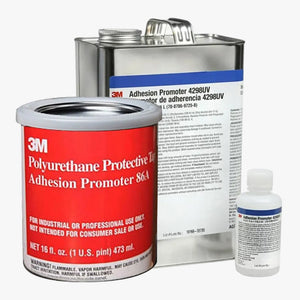
3M Adhesion Promoters
14 products -
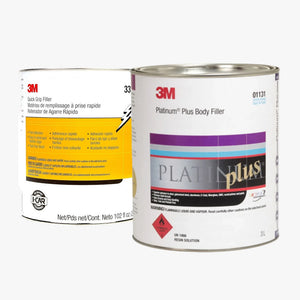
3M Fillers
21 products -
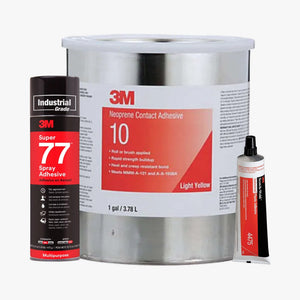
3M Flexible Adhesives
96 products -
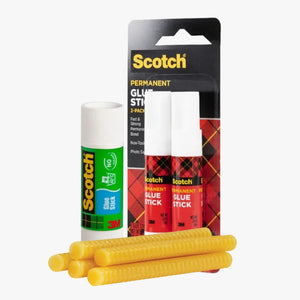
3M Glue Sticks & Tubes
14 products -
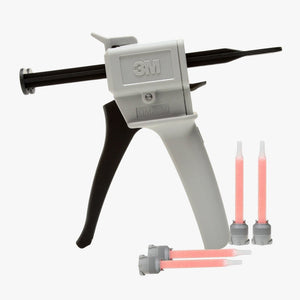
3M Nozzles & Accessories
29 products -
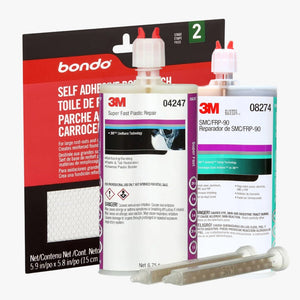
3M Repair Adhesives & Patches
16 products -
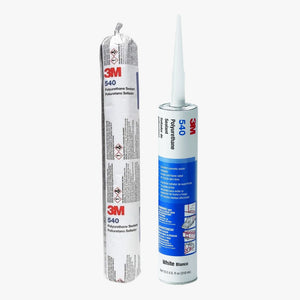
3M Sealants
64 products -
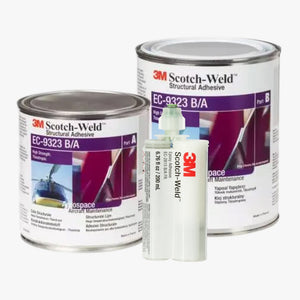
3M Structural Adhesives
129 products -
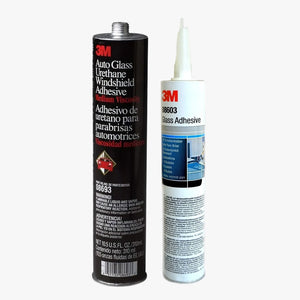
3M Windshield Adhesives
6 products
3M
Regular price $19.36Unit priceIn stock (21 units)-
- 12 pack
3M
Regular price $307.84Unit priceAvailable for Backorder -
- 12 pack
3M
Regular price $213.76Unit priceAvailable for Backorder -
- 12 pack
3M
Regular price $311.98Unit priceVery low stock (1 unit) -
- 6 pack
3M
3M 2214 Scotch-Weld Epoxy Adhesive, Regular, Gray, 6 fl oz Cartridge (7000000811) (6 Pack)
Regular price $561.23Unit priceAvailable for Backorder -
 9% off
3M
3M 30NF Fastbond Contact Adhesive, Water-Based, Green, 1 Gallon Can (7100071654)
Sale price $142.17 Regular price $155.90Unit priceLow stock (15 units)- 9% off
3M
3M 3738 Q 3738 AE Hot Melt Adhesive 3738AE, Tan, 0.45 in x 12 in, 11 lb (7100023046)
Sale price $276.83 Regular price $303.82Unit priceAvailable for Backorder -

3M
3M 20 20-20OZ-IND Heavy Duty Spray Adhesive, Clear, 16 fl oz Can Net Wt 13.8 oz (7100179437)
Regular price $11.68Unit priceVery low stock (8 units)- 20% off
3M
3M DP420 Epoxy Adhesive, Off-White, 50 mL Duo-Pak (7100148736)
Sale price $38.19 Regular price $47.73Unit priceAvailable for Backorder -
- 9% off
3M
Sale price $35.24 Regular price $38.66Unit priceVery low stock (5 units) -
3M
3M 90 30023 Hi-Strength Spray Adhesive, Clear, 24 fl oz Can (Net Wt 17.6 oz) (7000023924)
Regular price $25.65Unit priceAvailable for Backorder-
3M
Regular price $35.61Unit priceAvailable for Backorder-
3M
3M 08272 SMC/Fiberglass Repair Adhesive-10, Green, 400 mL Cartridge (7000119844)
Regular price $131.76Unit priceLow stock (11 units)-
- 17% off
3M
3M 7000045748 Lightweight Body Filler 1 Gallon Can (Includes Cream Hardener)
Sale price $48.76 Regular price $58.99Unit priceAvailable for Backorder -
- 12 pack
3M
Regular price $750.15Unit priceAvailable for Backorder -
- 12 pack
3M
Regular price $358.40Unit priceVery low stock (1 unit) -
- 12 pack
3M
Regular price $337.20Unit priceAvailable for Backorder -
- 12 pack
3M
Regular price $236.32Unit priceAvailable for Backorder -
- 4 pack
3M
Regular price $821.60Unit priceAvailable for Backorder -
- 36 pack
3M
3M 2216 Epoxy Adhesive, Gray, Part B/A Tube Kit, 2 fl oz (59.1 mL) (7000000812) (36 Pack)
Regular price $360.60Unit priceAvailable for Backorder -
- 12 pack
3M
Regular price $351.60Unit priceAvailable for Backorder -
- 6 pack
3M
Regular price $221.48Unit priceAvailable for Backorder -
- 12 pack
3M
Regular price $370.56Unit priceAvailable for Backorder -
- 6 pack
3M
Regular price $361.58Unit priceAvailable for Backorder -
- 50 pack
3M
Regular price $170.44Unit priceAvailable for Backorder -
- 4 pack

3M
3M 464 Dynatron Dyna-Glass Short Strand Filler, 1 gal (7000125049) (4 Pack)
Regular price $352.35Unit priceAvailable for Backorder - 6 pack
3M
Regular price $93.53Unit priceAvailable for Backorder -
- 4 pack

3M
Regular price $501.55Unit priceAvailable for Backorder - 72 pack
3M
Regular price $72.90Unit priceAvailable for Backorder -
- 10 pack
3M
3M TL71 Threadlocker, Red, 10 mL Bottle (7100039197) (10 Pack)
Regular price $128.25Unit priceAvailable for Backorder -
- 10 pack
3M
Regular price $201.00Unit priceAvailable for Backorder -
- 12 pack

3M
Regular price $2,132.70Unit priceAvailable for Backorder - 144 pack
3M
3M 110 Scotch-Weld Epoxy Adhesive DP, Gray, 200 mL Duo-Pak (7000121312) (144 Pack)
Regular price $1,148.10Unit priceAvailable for Backorder -
- 6 pack
3M
3M 2216 Scotch-Weld Epoxy Adhesive, Translucent, Part B/A, 2 Quart (7000000861) (6 Pack)
Regular price $1,666.95Unit priceAvailable for Backorder -
- 12 pack
3M
3M DP600NS Urethane Adhesive, Black, 48.5 mL Duo-Pak (7100148738) (12 Pack)
Regular price $231.60Unit priceAvailable for Backorder -
- 12 pack
3M
3M 525 Polyurethane Construction Sealant, Gray, 10.5 fl oz Cartridge (7100200170) (12 Pack)
Regular price $99.90Unit priceAvailable for Backorder -


3M Scotch-Weld Adhesives


3M Adhesives, Sealants, & Fillers
- Fillers: Body fillers, glazing putties, and repair compounds for filling dents, scratches, and surface imperfections before priming and finishing.
- Flexible Adhesives: Bonding solutions designed to maintain adhesion on substrates that flex, vibrate, or experience thermal expansion without cracking or losing grip.
- Sealants: Flexible compounds for sealing joints, seams, and gaps against moisture, air, and contaminants in automotive, construction, and industrial applications.
- Sealants & Fillers: Combination products that both seal and fill voids, providing gap-bridging capability along with environmental protection in a single application.
- Structural Adhesives: High-strength bonding agents, including epoxies and acrylics, engineered to replace or supplement mechanical fasteners in load-bearing assemblies.
Frequently Asked Questions
What's the difference between structural adhesives and regular bonding adhesives?
What's the difference between structural adhesives and regular bonding adhesives?
Structural adhesives are engineered to carry significant loads and can replace or supplement mechanical fasteners like welds, rivets, and screws in load-bearing assemblies. They typically achieve over 1,000 psi overlap shear strength and include epoxies, acrylics, and urethanes formulated for high-strength applications. Regular bonding adhesives handle lighter-duty attachment where the bond isn't carrying structural loads—securing trim, attaching nameplates, or bonding non-structural components. Using regular adhesive where structural strength is needed risks joint failure under load.
Which 3M sealant works best for automotive body seams?
Which 3M sealant works best for automotive body seams?
Polyurethane sealants are the standard for automotive body seam sealing. They offer excellent adhesion to primed and painted metal, remain flexible to absorb vibration and body flex, are paintable after curing, and resist water, road salt, and automotive fluids. Apply to clean, primed surfaces for best adhesion. For underbody seams exposed to road debris, heavier-bodied seam sealers with chip resistance provide additional protection. Silicone sealants generally aren't recommended for automotive body work because most paints won't adhere to silicone residue.
What's the difference between one-part and two-part adhesives?
What's the difference between one-part and two-part adhesives?
One-part adhesives cure through exposure to air, moisture, heat, or UV light and are ready to use without mixing. They're convenient but offer less control over working time. Two-part adhesives require mixing a resin and hardener (or base and activator) to initiate curing. They offer adjustable working times based on mix ratios and ambient temperature, higher ultimate strength in most formulations, and cure independent of environmental conditions. Two-part systems require accurate mixing and have limited pot life once mixed, but provide more predictable performance for critical applications.
Can I use sealant as an adhesive or adhesive as a sealant?
Can I use sealant as an adhesive or adhesive as a sealant?
Generally, no. Sealants are formulated for flexibility and environmental sealing, not structural strength—using them as adhesives results in weak bonds that fail under load. Adhesives are formulated for strength and may be too rigid to accommodate joint movement or may not provide adequate environmental sealing. Some products are designed as adhesive-sealants that perform both functions, but these are specific formulations, not interchangeable use of separate products. Match the product to the primary function required and don't assume one can substitute for the other.
What's the difference between urethane, silicone, and acrylic sealants?
What's the difference between urethane, silicone, and acrylic sealants?
Urethane sealants offer excellent adhesion, paintability, and abrasion resistance, making them ideal for automotive, construction, and industrial sealing where the joint will be topcoated. Silicone sealants handle extreme temperatures (-65°F to 400°F+), UV exposure, and remain flexible indefinitely, but most paints won't adhere to silicone. Acrylic latex sealants are economical, paintable, and easy to clean up, but offer less flexibility and durability than urethane or silicone. Choose based on whether you need paintability, temperature resistance, flexibility, or chemical resistance for your specific application.